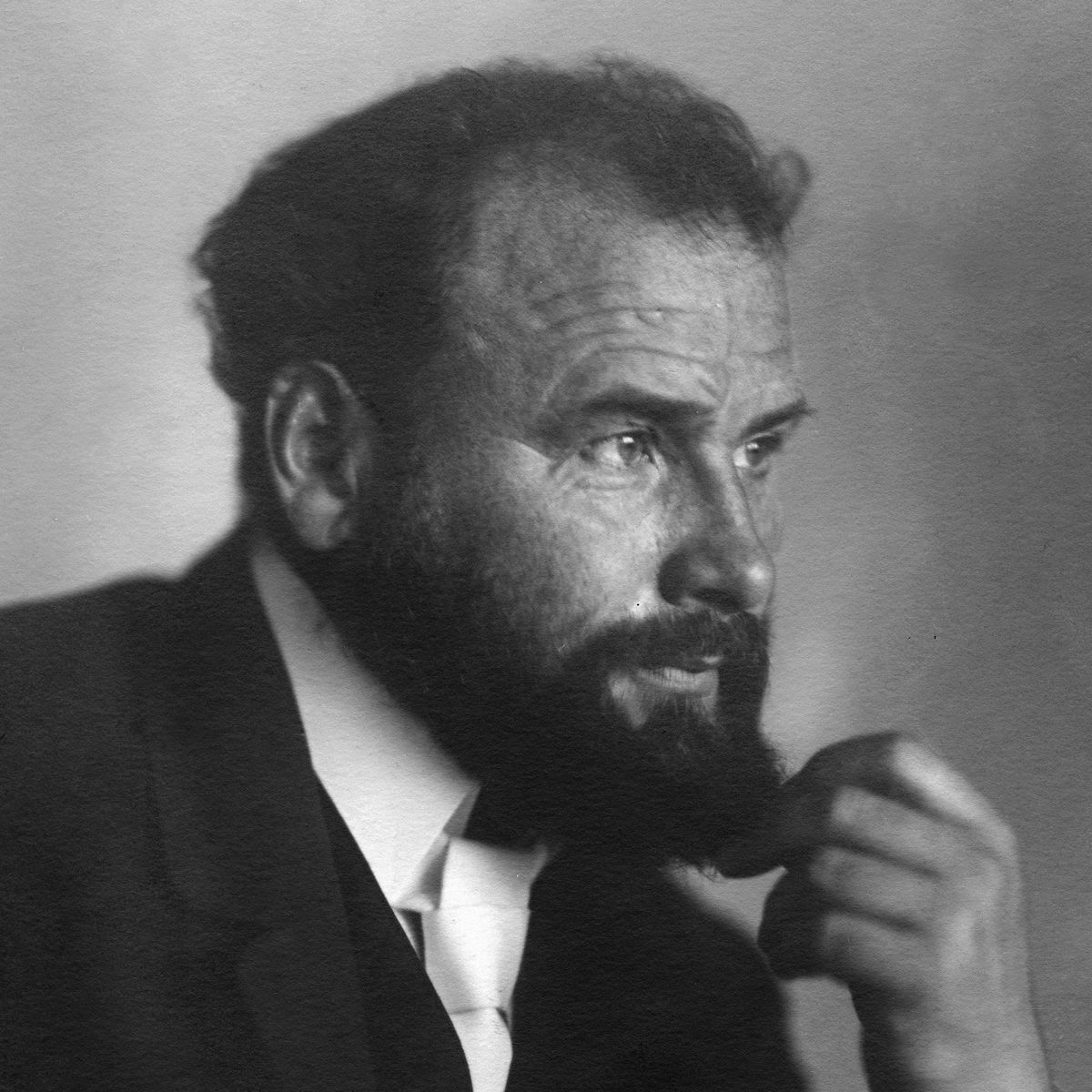
Gustav Klimt was born on the outskirts of Vienna, Austria, on July 14, 1862. His father, Ernst, was a struggling gold engraver who had immigrated to Vienna from Bohemia, and his mother, Anna, was musically talented, although she had never realized her dream of becoming a professional musician. Perhaps genetically predisposed to the arts, then, Klimt displayed a notable talent from an early age, and at 14 years old left his normal school to attend the Vienna School of Arts and Crafts on a full scholarship, no small matter considering both his youth and the relative poverty in which he had been raised.
Over time, Klimt began to develop a more personal style and his work became quite controversial due to its sexual undertones. In 1900, Klimt’s paintings for the ceiling of the Great Hall of the University of Vienna were criticised as being pornographic, and he decided not to accept any more public commissions in the future. However, he achieved acclaim with his masterful use of the gold leaf technique and the paintings that would come to be known as his “golden phase”. Plenty of private commissions followed, allowing him to be selective about whom to work for. Klimt’s art had a big influence on his contemporaries, most notably the younger artist Egon Schiele, who was mentored by Klimt.
From the 1890s onwards, Klimt spent most of his time with Austrian fashion designer Emilie Louise Flöge, a sister of his sister-in-law, who became one of his favourite models and his companion for the rest of his life as well as one of the most famous muses in art history. Klimt is said to have fathered 14 children, though he kept his romantic life mostly hidden from the public eye. He died in 1918 following a stroke and pneumonia as a result of the worldwide influenza pandemic that year.
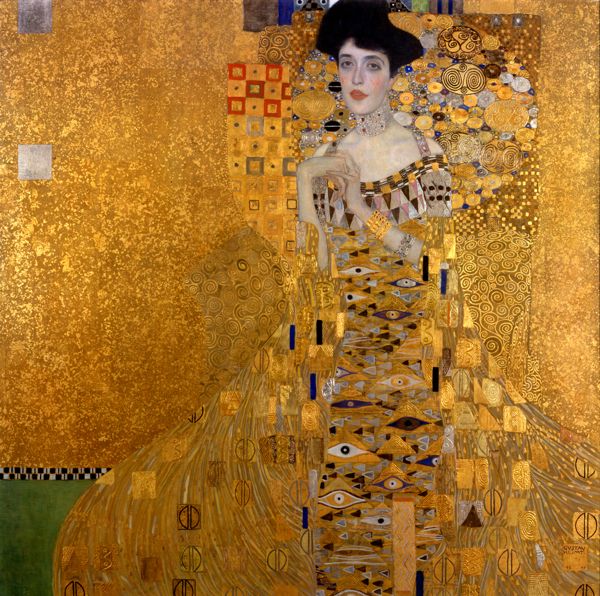
"Portrait of Adele Bloch-Bauer I" (1907) is also known as "The Lady in Gold" or "The Woman in Gold". The portrait was commissioned by the model’s husband Ferdinand Bloch-Bauer and is the final work in Klimt’s golden phase as well as the first of the two depictions of Adele Bloch-Bauer by Klimt. Adele passed away in 1925 and stipulated in her will that the portraits Klimt painted of her should be left to the Galerie Belvedere. However, the painting was stolen by the Nazis in 1941, along with other assets of Ferdinand Bloch-Bauer. It was then given to the Galerie Belvedere by a lawyer acting on behalf of the German state. In 1998, a lawsuit against the Galerie Belvedere was started to reclaim artworks stolen from Jewish owners during the war, and the painting was finally returned to one of Ferdinand’s nieces, who sold it to an art collector who then placed it in the New York gallery the Neue Galerie, where it is held to this day.
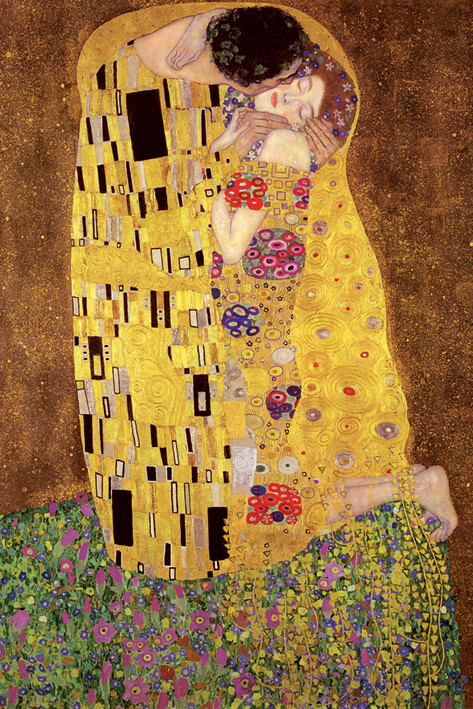
"The Kiss" ("Lovers") by Gustav Klimt is the most famous Austrian painting and the highlight of the permanent collection at the Upper Belvedere. It shows a couple swathed in richly embellished robes embracing in a meadow of flowers on the brink of a precipice. The painting dates from 1907/08 at the height of Klimt’s “Golden Period” when the artist developed a new technique of combining gold leaf with oils and bronze paint.
In this early-twentieth-work Klimt was making a general allegorical statement about love being at the heart of human existence. The fact that the painting still retains its immediacy and emotional impact is a testimony to the artist’s extraordinary achievement. The lovers’ garments are adorned with gold leaf and the background, too, is suffused with delicate gold, silver, and even platinum flakes. The Austrian state purchased the Kiss for the recently founded Moderne Galerie, which was housed at the Lower Belvedere, from its first exhibition in 1908. The painting has been in the Belvedere’s collections ever since.
Today, Gustav Klimt’s artworks can be found in important collections around the world, most notably the Museum of Modern Art and the Metropolitan Museum of Art in New York (The Metropolitan Museum of Art), the Leopold Museum and the Belvedere Museum in Vienna (The Leopold Museum), La Galleria Nazionale in Rome (La Galleria Nazionale), and the National Gallery in London ( The National Gallery). Finally, the impressive Secession Building in Vienna ( The Secesion Building) still houses Klimt’s Beethoven Frieze, still recognised today as one of the most important artworks of the Secession style.